Buy phonetracker.eu ?
We are moving the project
phonetracker.eu .
Are you interested in purchasing the domain
phonetracker.eu ?
domain@kv-gmbh.de · 0541-91531010
Buy phonetracker.eu ?
What are conjunctional clauses, relative clauses, demonstrative clauses, and infinitive clauses?
Conjunctional clauses are dependent clauses that are introduced by a conjunction, such as "because," "although," or "while." They provide additional information about the main clause in a sentence. Relative clauses are also dependent clauses that provide more information about a noun in the main clause. They are introduced by relative pronouns like "who," "which," or "that." Demonstrative clauses are dependent clauses that function as adjectives and provide more information about a noun in the main clause. They are introduced by demonstrative pronouns like "this," "that," "these," or "those." Infinitive clauses are dependent clauses that are formed with an infinitive verb (to + base form of the verb). They can function as nouns, adjectives, or adverbs in a sentence. **
Are conjunctive clauses always adverbial clauses?
No, conjunctive clauses are not always adverbial clauses. While adverbial clauses are a type of conjunctive clause that function as adverbs to modify verbs, adjectives, or other adverbs, there are also other types of conjunctive clauses. For example, there are conjunctive clauses that function as noun clauses, such as in "I know that you are busy." In this sentence, "that you are busy" is a conjunctive clause functioning as a noun clause, not an adverbial clause. Therefore, conjunctive clauses can serve various grammatical functions beyond just adverbial clauses. **


Similar search terms for Clauses
Top-Angebote
Products related to Clauses:
-
Clever Finds Smart Watch Display With Health Monitoring And Sports Tracking Smart Watch Display With Health Monitoring And Sports TrackingExperience smarter days with a watch designed to keep you connected, active, and in control. This advanced smart watch features a vibrant 2.01 inch AMOLED HD display, 24H health tracking, and multiple fitness tools for everyday performance. Built...95,97 $*Shipping: 0,00 $Secure redirect to the provider
-
Everyday Crate SmartGuard Pet GPS Tracker Collar For Dogs & Cats With Waterproof Real Time Location Tracking redNever wonder where your furry companion has wandered again. This advanced pet GPS tracker helps pet parents stay connected to their dogs and cats with accurate realtime location monitoring and smart safety features. Designed for active pets and...74,97 $*Shipping: 0,00 $Secure redirect to the provider
-
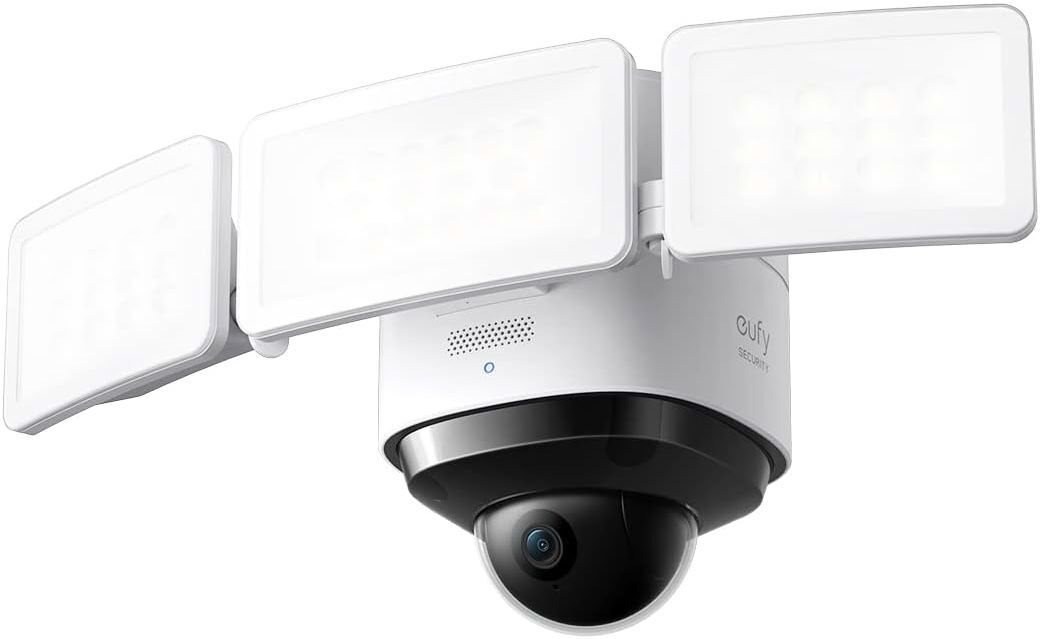
eufy Security Floodlight Cam S330 – 2K Ultra-HD 360-Degree Pan & Tilt Smart SurveillanceSecure your home with a perimeter defence system that leaves nowhere for intruders to hide. The eufy Security Floodlight Cam S330 (identified by EAN 0194644085445) is a sophisticated fusion of intelligent surveillance and high-intensity illumination. Engineered to eliminate the critical flaw of fixed-lens cameras—the blind spot—this professional-grade unit offers 360-degree situational awareness. By combining motorised motion with on-device AI, the S330 transforms your driveway, garden, or business frontage into a fully automated security hub that tracks threats in real-time. Key Features & Benefits Total Situational Awareness with 360-Degree Pan & Tilt: Effortlessly scan your entire property and eliminate hidden corners; the motorised lens allows for a full horizontal view, ensuring no movement goes unnoticed across your entire perimeter. Pro-Grade Clarity with 2K Full HD Resolution: Capture critical details with stunning precision; the high-resolution sensor provides the sharpness needed to identify facial features and vehicle details, providing actionable evidence when it matters most. Intelligent AI Subject Lock and Tracking: Stay one step ahead of intruders; the advanced on-device AI identifies human movement, locks onto the subject, and automatically pans to follow them, ensuring the target remains the centre of attention. Active Deterrence with 2,000-Lumen Dimmable Floodlights: Transform night into day; the motion-activated ultra-bright LEDs act as a powerful visual deterrent while providing full-colour night vision for unparalleled nocturnal surveillance. Zero Recurring Costs with Local Data Storage: Enjoy complete professional security with no monthly subscription fees; your footage is stored safely on-device, giving you total ownership of your data and significant long-term savings. Customisable Smart Detection Zones: Minimise frustrating false alarms; tailor the camera’s sensitivity and focus areas to ensure you only receive notifications for the movements that actually impact your security. Engineered for the Elements with Professional Weatherproofing: Designed to withstand the unpredictable UK climate, the robust housing ensures reliable performance through heavy rain, snow, and extreme temperatures. Why Choose This Product The eufy Security Floodlight Cam S330 (EAN 0194644085445)199,00 £*Shipping: 0,00 £Secure redirect to the provider



-
What are relative clauses and conjunctional clauses?
Relative clauses are clauses that provide additional information about a noun in the main clause. They are introduced by relative pronouns such as "who," "which," "that," and "whom." For example, in the sentence "The book that I read is very interesting," the relative clause "that I read" provides more information about the noun "book." Conjunctional clauses, on the other hand, are clauses that are connected to the main clause by conjunctions such as "and," "but," "or," "if," and "because." They can express relationships such as addition, contrast, alternative, condition, and cause. For example, in the sentence "I will go to the park if the weather is nice," the conjunctional clause "if the weather is nice" expresses a condition for the action in the main clause. **
-
What are the French conditional clauses (si-clauses)?
French conditional clauses, also known as si-clauses, are used to express a hypothetical situation and its potential outcome. They consist of two parts: the si clause (if clause), which describes the condition, and the main clause, which describes the potential result. The si clause is typically formed using the conjunction "si" followed by the imperfect tense or the pluperfect tense, while the main clause is formed using the conditional tense. These clauses are commonly used to talk about what would happen in certain situations if a specific condition were met. **
-
How can subordinate clauses be rewritten as main clauses?
Subordinate clauses can be rewritten as main clauses by removing the subordinating conjunction and making any necessary adjustments to the verb tense or word order. For example, the subordinate clause "because she was tired" can be rewritten as the main clause "she was tired." This transformation allows the subordinate clause to stand alone as a complete sentence. Additionally, any pronouns or other words that were dependent on the subordinating conjunction may need to be adjusted to ensure the new main clause is grammatically correct. **
-
How can one recognize main clauses and subordinate clauses?
Main clauses can stand alone as complete sentences, while subordinate clauses cannot. Subordinate clauses often begin with subordinating conjunctions such as "although," "because," "if," "when," or "while." They also often contain a subject and a verb, but they do not express a complete thought on their own. Main clauses, on the other hand, express a complete thought and can function as independent sentences. By identifying these characteristics, one can recognize main and subordinate clauses in a sentence. **

How can adverbial clauses be used as subordinate clauses?
Adverbial clauses can be used as subordinate clauses to provide additional information about the main clause. They can modify the verb in the main clause by expressing time, place, manner, condition, reason, purpose, or concession. For example, in the sentence "She went to bed after she finished her homework," the adverbial clause "after she finished her homework" provides information about the timing of the main action "She went to bed." Adverbial clauses are introduced by subordinating conjunctions such as after, before, while, since, because, if, although, etc. **
How do I transform subordinate clauses into main clauses?
To transform a subordinate clause into a main clause, you need to make sure that the clause can stand alone as a complete sentence. This means adding a subject and a verb to the clause if it doesn't already have them. You may also need to adjust the word order or add any necessary punctuation. Once these changes are made, the subordinate clause will become a main clause that can function independently within a sentence. **
Top-Angebote
Products related to Clauses:
-
Enesco/Dept 56 More Letters for the Clauses Clothtique Red , RedEvery year, Mr. and Mrs. Claus are eager to receive and read More Letters for the Clauses. The red mailbox has holiday accents including holly leaves, red berries, and a red bow; it is filled with wrapped packages and rolled-up letters. This happy...149,99 $*Shipping: 20,95 $Secure redirect to the provider
-
Enesco/Dept 56 More Letters for the Clauses African American Clothtique Red , RedEvery year, Mr. and Mrs. Claus are eager to receive and read More Letters for the Clauses. The red mailbox has holiday accents including holly leaves, red berries, and a red bow; it is filled with wrapped packages and rolled-up letters. This happy,...149,99 $*Shipping: 20,95 $Secure redirect to the provider
-
Clever Finds Smart Watch Display With Health Monitoring And Sports Tracking Smart Watch Display With Health Monitoring And Sports TrackingExperience smarter days with a watch designed to keep you connected, active, and in control. This advanced smart watch features a vibrant 2.01 inch AMOLED HD display, 24H health tracking, and multiple fitness tools for everyday performance. Built...95,97 $*Shipping: 0,00 $Secure redirect to the provider
-
Everyday Crate SmartGuard Pet GPS Tracker Collar For Dogs & Cats With Waterproof Real Time Location Tracking redNever wonder where your furry companion has wandered again. This advanced pet GPS tracker helps pet parents stay connected to their dogs and cats with accurate realtime location monitoring and smart safety features. Designed for active pets and...74,97 $*Shipping: 0,00 $Secure redirect to the provider
-
What are conjunctional clauses, relative clauses, demonstrative clauses, and infinitive clauses?
Conjunctional clauses are dependent clauses that are introduced by a conjunction, such as "because," "although," or "while." They provide additional information about the main clause in a sentence. Relative clauses are also dependent clauses that provide more information about a noun in the main clause. They are introduced by relative pronouns like "who," "which," or "that." Demonstrative clauses are dependent clauses that function as adjectives and provide more information about a noun in the main clause. They are introduced by demonstrative pronouns like "this," "that," "these," or "those." Infinitive clauses are dependent clauses that are formed with an infinitive verb (to + base form of the verb). They can function as nouns, adjectives, or adverbs in a sentence. **
-
Are conjunctive clauses always adverbial clauses?
No, conjunctive clauses are not always adverbial clauses. While adverbial clauses are a type of conjunctive clause that function as adverbs to modify verbs, adjectives, or other adverbs, there are also other types of conjunctive clauses. For example, there are conjunctive clauses that function as noun clauses, such as in "I know that you are busy." In this sentence, "that you are busy" is a conjunctive clause functioning as a noun clause, not an adverbial clause. Therefore, conjunctive clauses can serve various grammatical functions beyond just adverbial clauses. **
-
What are relative clauses and conjunctional clauses?
Relative clauses are clauses that provide additional information about a noun in the main clause. They are introduced by relative pronouns such as "who," "which," "that," and "whom." For example, in the sentence "The book that I read is very interesting," the relative clause "that I read" provides more information about the noun "book." Conjunctional clauses, on the other hand, are clauses that are connected to the main clause by conjunctions such as "and," "but," "or," "if," and "because." They can express relationships such as addition, contrast, alternative, condition, and cause. For example, in the sentence "I will go to the park if the weather is nice," the conjunctional clause "if the weather is nice" expresses a condition for the action in the main clause. **
-
What are the French conditional clauses (si-clauses)?
French conditional clauses, also known as si-clauses, are used to express a hypothetical situation and its potential outcome. They consist of two parts: the si clause (if clause), which describes the condition, and the main clause, which describes the potential result. The si clause is typically formed using the conjunction "si" followed by the imperfect tense or the pluperfect tense, while the main clause is formed using the conditional tense. These clauses are commonly used to talk about what would happen in certain situations if a specific condition were met. **
Similar search terms for Clauses
-
eufy Security Floodlight Cam S330 – 2K Ultra-HD 360-Degree Pan & Tilt Smart SurveillanceSecure your home with a perimeter defence system that leaves nowhere for intruders to hide. The eufy Security Floodlight Cam S330 (identified by EAN 0194644085445) is a sophisticated fusion of intelligent surveillance and high-intensity illumination. Engineered to eliminate the critical flaw of fixed-lens cameras—the blind spot—this professional-grade unit offers 360-degree situational awareness. By combining motorised motion with on-device AI, the S330 transforms your driveway, garden, or business frontage into a fully automated security hub that tracks threats in real-time. Key Features & Benefits Total Situational Awareness with 360-Degree Pan & Tilt: Effortlessly scan your entire property and eliminate hidden corners; the motorised lens allows for a full horizontal view, ensuring no movement goes unnoticed across your entire perimeter. Pro-Grade Clarity with 2K Full HD Resolution: Capture critical details with stunning precision; the high-resolution sensor provides the sharpness needed to identify facial features and vehicle details, providing actionable evidence when it matters most. Intelligent AI Subject Lock and Tracking: Stay one step ahead of intruders; the advanced on-device AI identifies human movement, locks onto the subject, and automatically pans to follow them, ensuring the target remains the centre of attention. Active Deterrence with 2,000-Lumen Dimmable Floodlights: Transform night into day; the motion-activated ultra-bright LEDs act as a powerful visual deterrent while providing full-colour night vision for unparalleled nocturnal surveillance. Zero Recurring Costs with Local Data Storage: Enjoy complete professional security with no monthly subscription fees; your footage is stored safely on-device, giving you total ownership of your data and significant long-term savings. Customisable Smart Detection Zones: Minimise frustrating false alarms; tailor the camera’s sensitivity and focus areas to ensure you only receive notifications for the movements that actually impact your security. Engineered for the Elements with Professional Weatherproofing: Designed to withstand the unpredictable UK climate, the robust housing ensures reliable performance through heavy rain, snow, and extreme temperatures. Why Choose This Product The eufy Security Floodlight Cam S330 (EAN 0194644085445)199,00 £*Shipping: 0,00 £Secure redirect to the provider
-
Seagate SkyHawk 1TB Surveillance Hard Drive 3.5" SATA 6Gb/s 64MB Cache for DVR NVR CCTV Security Systems ST1000VXZ05**Seagate SkyHawk 1TB Surveillance Hard Drive – ST1000VXZ05** Designed specifically for surveillance systems, the Seagate SkyHawk 1TB internal hard drive provides reliable storage for DVR, NVR and CCTV security camera systems. It is built for continuous recording and is suitable for home, business and professional security installations. ### Key Features * **Brand:** Seagate * **Series:** SkyHawk * **Model:** ST1000VXZ05 * **Capacity:** 1TB * **Form Factor:** 3.5-inch * **Interface:** SATA 6Gb/s * **Cache:** 64MB * **Type:** Surveillance / Video Hard Drive * Designed for **DVR, NVR and CCTV security systems** * Suitable for **24/7 surveillance recording** * Ideal for storing video footage from multiple security cameras * **3-year Rescue Services** included where applicable by Seagate * Suitable for home, office, retail and commercial surveillance applications ### Ideal For This hard drive is suitable for use with compatible: * CCTV systems * DVR recorders * NVR101,99 £*Shipping: 0,00 £Secure redirect to the provider
-
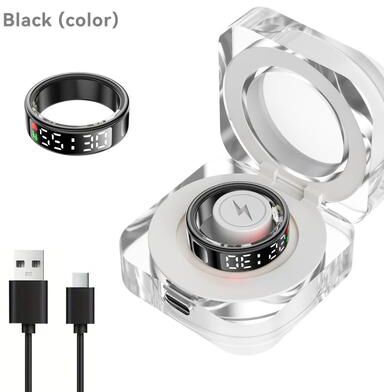
Uplift Essentials Health & Fitness Smart Ring Precision Sleep Tracking & Motion Monitoring black 11Professional Health & Fitness Smart Ring Precision Sleep Tracking & Motion MonitoringTake control of your wellness with the Professional Health & Fitness Smart Ring, a highperformance wearable wellness tracker designed for seamless integration into...85,97 $*Shipping: 0,00 $Secure redirect to the provider
-
How can subordinate clauses be rewritten as main clauses?
Subordinate clauses can be rewritten as main clauses by removing the subordinating conjunction and making any necessary adjustments to the verb tense or word order. For example, the subordinate clause "because she was tired" can be rewritten as the main clause "she was tired." This transformation allows the subordinate clause to stand alone as a complete sentence. Additionally, any pronouns or other words that were dependent on the subordinating conjunction may need to be adjusted to ensure the new main clause is grammatically correct. **
-
How can one recognize main clauses and subordinate clauses?
Main clauses can stand alone as complete sentences, while subordinate clauses cannot. Subordinate clauses often begin with subordinating conjunctions such as "although," "because," "if," "when," or "while." They also often contain a subject and a verb, but they do not express a complete thought on their own. Main clauses, on the other hand, express a complete thought and can function as independent sentences. By identifying these characteristics, one can recognize main and subordinate clauses in a sentence. **
-
How can adverbial clauses be used as subordinate clauses?
Adverbial clauses can be used as subordinate clauses to provide additional information about the main clause. They can modify the verb in the main clause by expressing time, place, manner, condition, reason, purpose, or concession. For example, in the sentence "She went to bed after she finished her homework," the adverbial clause "after she finished her homework" provides information about the timing of the main action "She went to bed." Adverbial clauses are introduced by subordinating conjunctions such as after, before, while, since, because, if, although, etc. **
-
How do I transform subordinate clauses into main clauses?
To transform a subordinate clause into a main clause, you need to make sure that the clause can stand alone as a complete sentence. This means adding a subject and a verb to the clause if it doesn't already have them. You may also need to adjust the word order or add any necessary punctuation. Once these changes are made, the subordinate clause will become a main clause that can function independently within a sentence. **
* All prices are inclusive of VAT and, if applicable, plus shipping costs. The offer information is based on the details provided by the respective shop and is updated through automated processes. Real-time updates do not occur, so deviations can occur in individual cases. ** Note: Parts of this content were created by AI.