Buy phonetracker.eu ?
We are moving the project
phonetracker.eu .
Are you interested in purchasing the domain
phonetracker.eu ?
domain@kv-gmbh.de · 0541-91531010
Buy phonetracker.eu ?
Was Nietzsche antisemitic?
Nietzsche's views on Judaism and Jewish people have been a topic of debate among scholars. While some argue that Nietzsche's writings contain antisemitic undertones, others believe that his criticisms were directed towards specific individuals or groups rather than the Jewish people as a whole. It is important to consider the historical context in which Nietzsche lived and wrote, as well as the complexity of his philosophical ideas, when discussing his views on this topic. **
What is Nietzsche 3?
Nietzsche 3 refers to the third phase of Friedrich Nietzsche's philosophical development, following his earlier periods of the "Apollonian" and "Dionysian" phases. In this phase, Nietzsche focused on the concept of the "will to power," which emphasizes the individual's desire for self-overcoming and self-assertion. He believed that this will to power drives human behavior and is the underlying force behind all existence. Nietzsche 3 represents a shift towards a more individualistic and existential perspective in his philosophy. **
Similar search terms for Nietzsche
Top-Angebote
Products related to Nietzsche:
-
The Complete Works of Friedrich Nietzsche 6 Books Box Collection Set - Non Fiction - Paperback Classic EditionsTitles in this set: 1. The Twilight Of The Idols 2. Beyond Good And Evil 3. Human, All Too Human 4. Ecce Homo 5. Thus Spake Zarathustra 6. On The Genealogy Of Morals Titles in this Set: The Twilight Of The Idols The Twilight of the Idols by Friedrich Nietzsche is an examination and destruction of the antiquated ideals and values of the time. In this work, the author is on a warpath against reason. The attacks on contemporary philosophers are frequently hostile, and the suggested opinions, often devastating However, it shows a deep understanding of morality and man's mean-spiritedness, while keeping alive an underlying feeling of optimism and affirmation. Beyond Good And Evil Beyond Good and Evil is Friedrich Nietzsche's seminal work that delves further into the concept previously discussed in Thus Spoke Zarathustra. First published in 1886, this book tackles the debate between an individual's feeling to stand out among others and our desire to serve others. This book explores a wide gamut of themes what is considered evil today was perhaps believed to be good before, an analysis of Christian morality, deep insights into human psychology, the concept of nationalism. This masterpiece of aphorisms continues to inspire thinkers even now. Human, All Too Human A series of maxims on everything from passion, science, vanity, women, and youth, to art, arrogance, and boredom, Human, All Too Human was referred to by Nietzsche himself as "the monument of a crisis" because it was produced during a period of profound change in his life. With his new "positivism" and scepticism, Nietzsche challenged his earlier metaphysical and psychological presumptions. Here, almost all of the issues from his later work are presented in highly witty language with a distinctive perceptiveness and honesty, not to mention mistrust and cynicism. It is still one of the foundational books for comprehending Nietzsche's philosophy. Ecce Homo Ecce Homo: How One Becomes What One Is was written in German by philosopher Friedrich Nietzsche in 1888. It was not published until 1908. Nietzsche traces his life and offers his own interpretation of his development as a philosopher He emphatically points out how unique his ideas are. He shows himself as separate from the masses who give in to self-indulgent feelings of pity. He announces boldly about how he does not feel remorse. He fully submits himself to his fatalistic beliefs and accepts life as it comes. The book contains several chapters with ironic self-laudatory titles, such as "Why I Am So Wise", "Why 1 Am So Clever", and " Why 1 Am a Destiny". Half-mocking and half-earnest, Ecce Homo is the definitive expression of Nietzsche's core beliefs. Thus Spake Zarathustra Friedrich Nietzsche's Thus Spake Zarathustra, published in four volumes between 1883 and 1885, is a work of philosophical fiction which seeks to address the problem of existence in a world where "God is dead". The author's search for meaning culminates in Zarathustra, the...12,89 £*Shipping: 2,99 £Secure redirect to the provider
-
Wilco International LLP Beyond Good and Evil – Deluxe Hardback Sprayed Edge Edition by Friedrich Nietzsche Classic Philosophy & Literary ClassicExplore one of the most provocative works in modern philosophy with this stunning deluxe hardback sprayed edge edition of Beyond Good and Evil by Friedrich Nietzsche. In this groundbreaking philosophical work, Nietzsche challenges traditional morality and explores the complexities of truth, power, religion, and human nature. With sharp insight and bold ideas, he questions accepted beliefs and introduces concepts that have shaped modern thought and intellectual discourse. This premium edition features a beautiful hardback cover and sprayed edges, making it not only a powerful intellectual read but also a striking collectible for any bookshelf. Ideal for students, philosophy enthusiasts, and collectors, this edition offers both substance and style. Why Readers Love This Edition: Influential work of modern philosophy Written by renowned thinker Friedrich Nietzsche Elegant deluxe hardback with sprayed edges Explores morality, truth, power, and human nature Perfect for study, collecting, or gifting A timeless and thought-provoking classic, Beyond Good and Evil continues to inspire and challenge readers around the world.4,50 £*Shipping: 1,99 £Secure redirect to the provider
-
Arcturus The Classic Friedrich Nietzsche Collection 5 Books Box Set - Ecce Homo, Beyond Good and Evil, Thus Spake Zarathustra, Human All Too Human and MoreThis handsome five-volume box set brings together the classic works Friedrich Nietzsche, presented with striking contemporary cover designs. One of the most prominent thinkers of the 19th century, Nietzsche was a cultural critic and philosopher whose theories on truth, morality, nihilism and the meaning of existence have had enormous influence on Western philosophy. This box set contains his most prominent works, including: - Human, All Too Human - Thus Spake Zarathustra - Beyond Good and Evil - On the Genealogy of Morals - Ecce Homo These influential essay collections have profoundly shaped modern philosophy and remain as pertinent now as they ever were.16,99 £*Shipping: 2,99 £Secure redirect to the provider
-
Clever Finds Smart Watch Display With Health Monitoring And Sports Tracking Smart Watch Display With Health Monitoring And Sports TrackingExperience smarter days with a watch designed to keep you connected, active, and in control. This advanced smart watch features a vibrant 2.01 inch AMOLED HD display, 24H health tracking, and multiple fitness tools for everyday performance. Built...95,97 $*Shipping: 0,00 $Secure redirect to the provider



-
Are Friedrich Nietzsche demigods?
No, Friedrich Nietzsche was not a demigod. He was a philosopher and cultural critic known for his ideas on existentialism, morality, and the concept of the "Übermensch" or "overman." While his ideas have had a significant impact on philosophy and intellectual thought, he was a human being and not a supernatural or divine figure. It is important to approach his work critically and engage with his ideas in a thoughtful and analytical manner. **
-
Did Nietzsche have depression?
There is no definitive answer to whether Nietzsche had depression as he was never formally diagnosed during his lifetime. However, many scholars and psychologists have analyzed his writings and personal correspondence and have suggested that he may have experienced symptoms of depression, such as feelings of despair, isolation, and nihilism. Nietzsche's own writings also reflect a deep sense of existential crisis and inner turmoil, which could be interpreted as indicative of depression. **
-
How sick was Nietzsche?
Nietzsche suffered from various health issues throughout his life, including severe migraines, vision problems, and digestive problems. In 1889, he experienced a mental breakdown and was diagnosed with syphilis, which eventually led to his deteriorating mental and physical health. He spent the last 11 years of his life in a state of mental and physical decline, eventually becoming completely incapacitated. His illness and decline greatly impacted his ability to continue his philosophical work and led to his eventual death in 1900. **
-
Who is God for Nietzsche?
For Nietzsche, God is a symbol of the ultimate authority and source of morality that has been imposed on humanity by traditional religious institutions. He sees God as a projection of human weakness and a tool used by those in power to control and manipulate the masses. Nietzsche famously declared that "God is dead," meaning that the traditional concept of God as a moral authority no longer holds sway in modern society. Instead, he calls for the creation of a new, individualistic morality that is not dependent on the existence of a divine being. **


Is God or Nietzsche dead?
Nietzsche famously declared that "God is dead" to signify the decline of traditional religious beliefs and the rise of secularism and individualism. However, this statement is often misunderstood as a literal claim about the existence of God. In contrast, Nietzsche's proclamation was more about the cultural and philosophical shifts away from traditional religious authority. As for Nietzsche himself, he passed away in 1900, so he is indeed dead. However, the question of the existence of God is a matter of personal belief and interpretation, and opinions on this topic vary widely. **
Was Nietzsche friendly towards war?
Nietzsche had a complex and often contradictory relationship with war. On one hand, he was critical of the destructive and senseless nature of war, and he believed that it could lead to the decline of civilization. However, he also saw war as a potential catalyst for the emergence of a new, stronger society, and he believed that it could serve as a means of overcoming decadence and promoting the development of a higher human type. Overall, Nietzsche's views on war were nuanced and evolved over time, reflecting his broader philosophical concerns about power, struggle, and the potential for human advancement. **
Top-Angebote
Products related to Nietzsche:
-
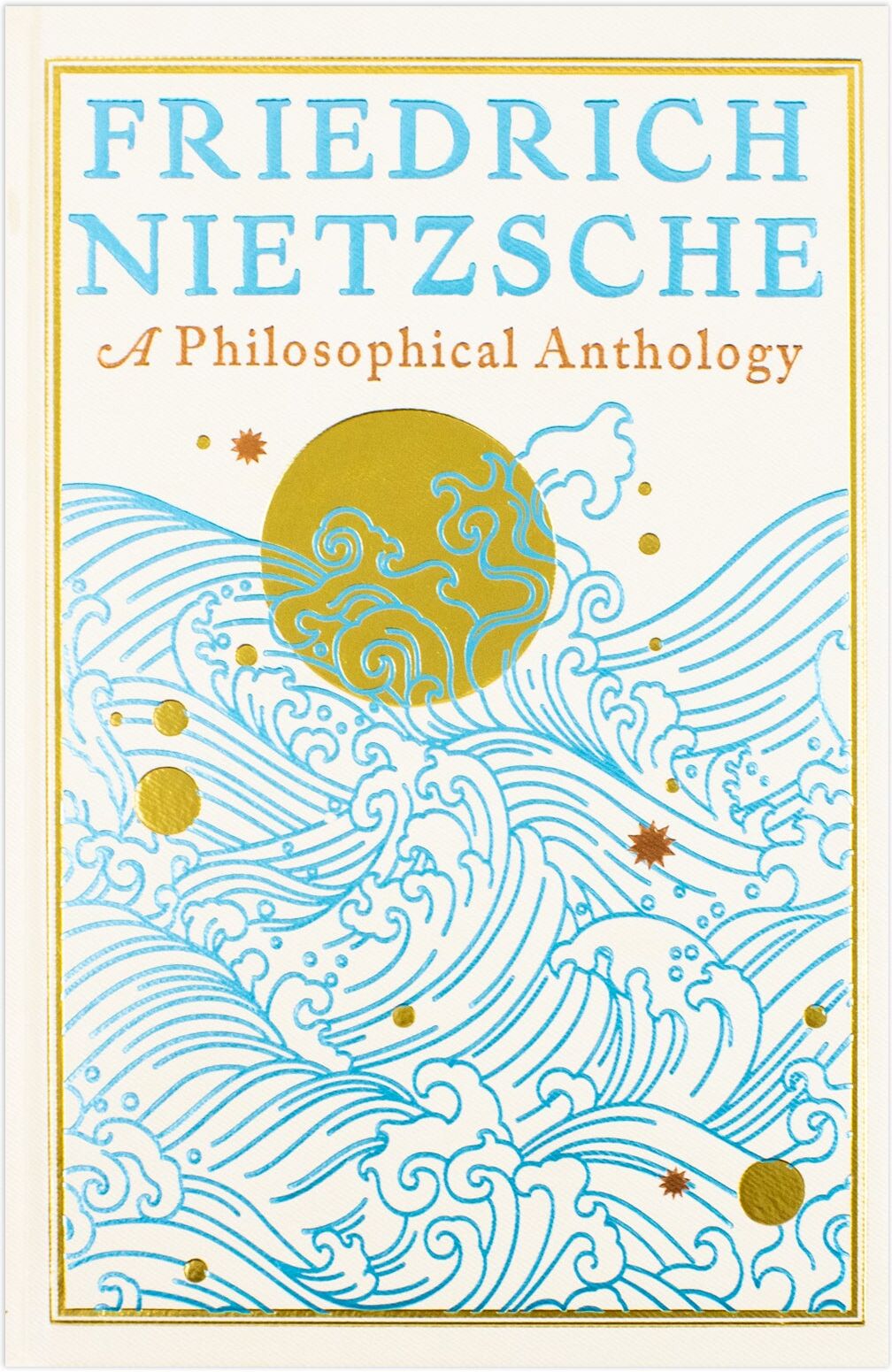
Wilco Books A Philosophical Anthology by Friedrich Nietzsche (Deluxe Leather Bound Edition)Dive into the mind of Friedrich Nietzsche with this comprehensive collection. Bringing together his most impactful works like Thus Spake Zarathustra, Beyond Good and Evil, On the Genealogy of Morals, etc, this volume confronts hard questions about power and morality. Nietzsche challenges conventional truth, dismantles traditional values, and demands that readers forge their own path. An unfiltered look into a philosophy that completely reshaped modern thinking for readers ready to question everything.10,99 £*Shipping: 2,99 £Secure redirect to the provider
-
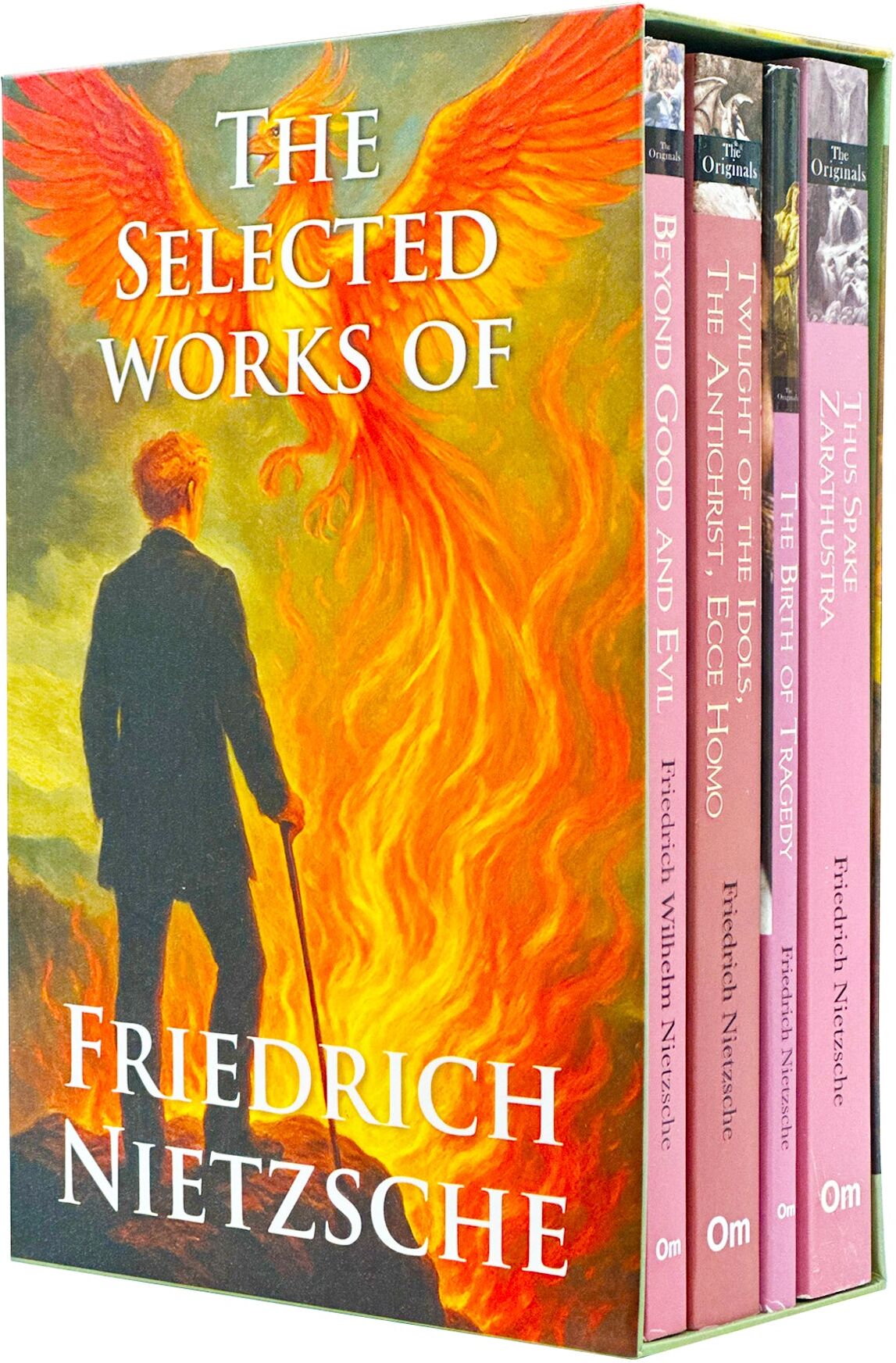
OM Books The Selected Works of Friedrich Nietzsche 4 Books Collection SetThe works of Friedrich Nietzsche, German philosopher and cultural critic, influenced Western philosophy and intellectual history. This box set brings together his most influential works that include his radical critique of truth in favour of perspectivisim; a genealogical critique of religion and Christian morality; the aesthetic affirmation of life and the profound crisis of nihilism; and a charaterisation of the human subject as the expression of competing wills.12,95 £*Shipping: 2,99 £Secure redirect to the provider
-
The Complete Works of Friedrich Nietzsche 6 Books Box Collection Set - Non Fiction - Paperback Classic EditionsTitles in this set: 1. The Twilight Of The Idols 2. Beyond Good And Evil 3. Human, All Too Human 4. Ecce Homo 5. Thus Spake Zarathustra 6. On The Genealogy Of Morals Titles in this Set: The Twilight Of The Idols The Twilight of the Idols by Friedrich Nietzsche is an examination and destruction of the antiquated ideals and values of the time. In this work, the author is on a warpath against reason. The attacks on contemporary philosophers are frequently hostile, and the suggested opinions, often devastating However, it shows a deep understanding of morality and man's mean-spiritedness, while keeping alive an underlying feeling of optimism and affirmation. Beyond Good And Evil Beyond Good and Evil is Friedrich Nietzsche's seminal work that delves further into the concept previously discussed in Thus Spoke Zarathustra. First published in 1886, this book tackles the debate between an individual's feeling to stand out among others and our desire to serve others. This book explores a wide gamut of themes what is considered evil today was perhaps believed to be good before, an analysis of Christian morality, deep insights into human psychology, the concept of nationalism. This masterpiece of aphorisms continues to inspire thinkers even now. Human, All Too Human A series of maxims on everything from passion, science, vanity, women, and youth, to art, arrogance, and boredom, Human, All Too Human was referred to by Nietzsche himself as "the monument of a crisis" because it was produced during a period of profound change in his life. With his new "positivism" and scepticism, Nietzsche challenged his earlier metaphysical and psychological presumptions. Here, almost all of the issues from his later work are presented in highly witty language with a distinctive perceptiveness and honesty, not to mention mistrust and cynicism. It is still one of the foundational books for comprehending Nietzsche's philosophy. Ecce Homo Ecce Homo: How One Becomes What One Is was written in German by philosopher Friedrich Nietzsche in 1888. It was not published until 1908. Nietzsche traces his life and offers his own interpretation of his development as a philosopher He emphatically points out how unique his ideas are. He shows himself as separate from the masses who give in to self-indulgent feelings of pity. He announces boldly about how he does not feel remorse. He fully submits himself to his fatalistic beliefs and accepts life as it comes. The book contains several chapters with ironic self-laudatory titles, such as "Why I Am So Wise", "Why 1 Am So Clever", and " Why 1 Am a Destiny". Half-mocking and half-earnest, Ecce Homo is the definitive expression of Nietzsche's core beliefs. Thus Spake Zarathustra Friedrich Nietzsche's Thus Spake Zarathustra, published in four volumes between 1883 and 1885, is a work of philosophical fiction which seeks to address the problem of existence in a world where "God is dead". The author's search for meaning culminates in Zarathustra, the...12,89 £*Shipping: 2,99 £Secure redirect to the provider
-
Wilco International LLP Beyond Good and Evil – Deluxe Hardback Sprayed Edge Edition by Friedrich Nietzsche Classic Philosophy & Literary ClassicExplore one of the most provocative works in modern philosophy with this stunning deluxe hardback sprayed edge edition of Beyond Good and Evil by Friedrich Nietzsche. In this groundbreaking philosophical work, Nietzsche challenges traditional morality and explores the complexities of truth, power, religion, and human nature. With sharp insight and bold ideas, he questions accepted beliefs and introduces concepts that have shaped modern thought and intellectual discourse. This premium edition features a beautiful hardback cover and sprayed edges, making it not only a powerful intellectual read but also a striking collectible for any bookshelf. Ideal for students, philosophy enthusiasts, and collectors, this edition offers both substance and style. Why Readers Love This Edition: Influential work of modern philosophy Written by renowned thinker Friedrich Nietzsche Elegant deluxe hardback with sprayed edges Explores morality, truth, power, and human nature Perfect for study, collecting, or gifting A timeless and thought-provoking classic, Beyond Good and Evil continues to inspire and challenge readers around the world.4,50 £*Shipping: 1,99 £Secure redirect to the provider
-
Was Nietzsche antisemitic?
Nietzsche's views on Judaism and Jewish people have been a topic of debate among scholars. While some argue that Nietzsche's writings contain antisemitic undertones, others believe that his criticisms were directed towards specific individuals or groups rather than the Jewish people as a whole. It is important to consider the historical context in which Nietzsche lived and wrote, as well as the complexity of his philosophical ideas, when discussing his views on this topic. **
-
What is Nietzsche 3?
Nietzsche 3 refers to the third phase of Friedrich Nietzsche's philosophical development, following his earlier periods of the "Apollonian" and "Dionysian" phases. In this phase, Nietzsche focused on the concept of the "will to power," which emphasizes the individual's desire for self-overcoming and self-assertion. He believed that this will to power drives human behavior and is the underlying force behind all existence. Nietzsche 3 represents a shift towards a more individualistic and existential perspective in his philosophy. **
-
Are Friedrich Nietzsche demigods?
No, Friedrich Nietzsche was not a demigod. He was a philosopher and cultural critic known for his ideas on existentialism, morality, and the concept of the "Übermensch" or "overman." While his ideas have had a significant impact on philosophy and intellectual thought, he was a human being and not a supernatural or divine figure. It is important to approach his work critically and engage with his ideas in a thoughtful and analytical manner. **
-
Did Nietzsche have depression?
There is no definitive answer to whether Nietzsche had depression as he was never formally diagnosed during his lifetime. However, many scholars and psychologists have analyzed his writings and personal correspondence and have suggested that he may have experienced symptoms of depression, such as feelings of despair, isolation, and nihilism. Nietzsche's own writings also reflect a deep sense of existential crisis and inner turmoil, which could be interpreted as indicative of depression. **
Similar search terms for Nietzsche
-
Arcturus The Classic Friedrich Nietzsche Collection 5 Books Box Set - Ecce Homo, Beyond Good and Evil, Thus Spake Zarathustra, Human All Too Human and MoreThis handsome five-volume box set brings together the classic works Friedrich Nietzsche, presented with striking contemporary cover designs. One of the most prominent thinkers of the 19th century, Nietzsche was a cultural critic and philosopher whose theories on truth, morality, nihilism and the meaning of existence have had enormous influence on Western philosophy. This box set contains his most prominent works, including: - Human, All Too Human - Thus Spake Zarathustra - Beyond Good and Evil - On the Genealogy of Morals - Ecce Homo These influential essay collections have profoundly shaped modern philosophy and remain as pertinent now as they ever were.16,99 £*Shipping: 2,99 £Secure redirect to the provider
-
Clever Finds Smart Watch Display With Health Monitoring And Sports Tracking Smart Watch Display With Health Monitoring And Sports TrackingExperience smarter days with a watch designed to keep you connected, active, and in control. This advanced smart watch features a vibrant 2.01 inch AMOLED HD display, 24H health tracking, and multiple fitness tools for everyday performance. Built...95,97 $*Shipping: 0,00 $Secure redirect to the provider
-
Everyday Crate SmartGuard Pet GPS Tracker Collar For Dogs & Cats With Waterproof Real Time Location Tracking redNever wonder where your furry companion has wandered again. This advanced pet GPS tracker helps pet parents stay connected to their dogs and cats with accurate realtime location monitoring and smart safety features. Designed for active pets and...74,97 $*Shipping: 0,00 $Secure redirect to the provider
-
eufy Security Floodlight Cam S330 – 2K Ultra-HD 360-Degree Pan & Tilt Smart SurveillanceSecure your home with a perimeter defence system that leaves nowhere for intruders to hide. The eufy Security Floodlight Cam S330 (identified by EAN 0194644085445) is a sophisticated fusion of intelligent surveillance and high-intensity illumination. Engineered to eliminate the critical flaw of fixed-lens cameras—the blind spot—this professional-grade unit offers 360-degree situational awareness. By combining motorised motion with on-device AI, the S330 transforms your driveway, garden, or business frontage into a fully automated security hub that tracks threats in real-time. Key Features & Benefits Total Situational Awareness with 360-Degree Pan & Tilt: Effortlessly scan your entire property and eliminate hidden corners; the motorised lens allows for a full horizontal view, ensuring no movement goes unnoticed across your entire perimeter. Pro-Grade Clarity with 2K Full HD Resolution: Capture critical details with stunning precision; the high-resolution sensor provides the sharpness needed to identify facial features and vehicle details, providing actionable evidence when it matters most. Intelligent AI Subject Lock and Tracking: Stay one step ahead of intruders; the advanced on-device AI identifies human movement, locks onto the subject, and automatically pans to follow them, ensuring the target remains the centre of attention. Active Deterrence with 2,000-Lumen Dimmable Floodlights: Transform night into day; the motion-activated ultra-bright LEDs act as a powerful visual deterrent while providing full-colour night vision for unparalleled nocturnal surveillance. Zero Recurring Costs with Local Data Storage: Enjoy complete professional security with no monthly subscription fees; your footage is stored safely on-device, giving you total ownership of your data and significant long-term savings. Customisable Smart Detection Zones: Minimise frustrating false alarms; tailor the camera’s sensitivity and focus areas to ensure you only receive notifications for the movements that actually impact your security. Engineered for the Elements with Professional Weatherproofing: Designed to withstand the unpredictable UK climate, the robust housing ensures reliable performance through heavy rain, snow, and extreme temperatures. Why Choose This Product The eufy Security Floodlight Cam S330 (EAN 0194644085445)199,00 £*Shipping: 0,00 £Secure redirect to the provider
-
How sick was Nietzsche?
Nietzsche suffered from various health issues throughout his life, including severe migraines, vision problems, and digestive problems. In 1889, he experienced a mental breakdown and was diagnosed with syphilis, which eventually led to his deteriorating mental and physical health. He spent the last 11 years of his life in a state of mental and physical decline, eventually becoming completely incapacitated. His illness and decline greatly impacted his ability to continue his philosophical work and led to his eventual death in 1900. **
-
Who is God for Nietzsche?
For Nietzsche, God is a symbol of the ultimate authority and source of morality that has been imposed on humanity by traditional religious institutions. He sees God as a projection of human weakness and a tool used by those in power to control and manipulate the masses. Nietzsche famously declared that "God is dead," meaning that the traditional concept of God as a moral authority no longer holds sway in modern society. Instead, he calls for the creation of a new, individualistic morality that is not dependent on the existence of a divine being. **
-
Is God or Nietzsche dead?
Nietzsche famously declared that "God is dead" to signify the decline of traditional religious beliefs and the rise of secularism and individualism. However, this statement is often misunderstood as a literal claim about the existence of God. In contrast, Nietzsche's proclamation was more about the cultural and philosophical shifts away from traditional religious authority. As for Nietzsche himself, he passed away in 1900, so he is indeed dead. However, the question of the existence of God is a matter of personal belief and interpretation, and opinions on this topic vary widely. **
-
Was Nietzsche friendly towards war?
Nietzsche had a complex and often contradictory relationship with war. On one hand, he was critical of the destructive and senseless nature of war, and he believed that it could lead to the decline of civilization. However, he also saw war as a potential catalyst for the emergence of a new, stronger society, and he believed that it could serve as a means of overcoming decadence and promoting the development of a higher human type. Overall, Nietzsche's views on war were nuanced and evolved over time, reflecting his broader philosophical concerns about power, struggle, and the potential for human advancement. **
* All prices are inclusive of VAT and, if applicable, plus shipping costs. The offer information is based on the details provided by the respective shop and is updated through automated processes. Real-time updates do not occur, so deviations can occur in individual cases. ** Note: Parts of this content were created by AI.